

O-Ring Standard Size Chart

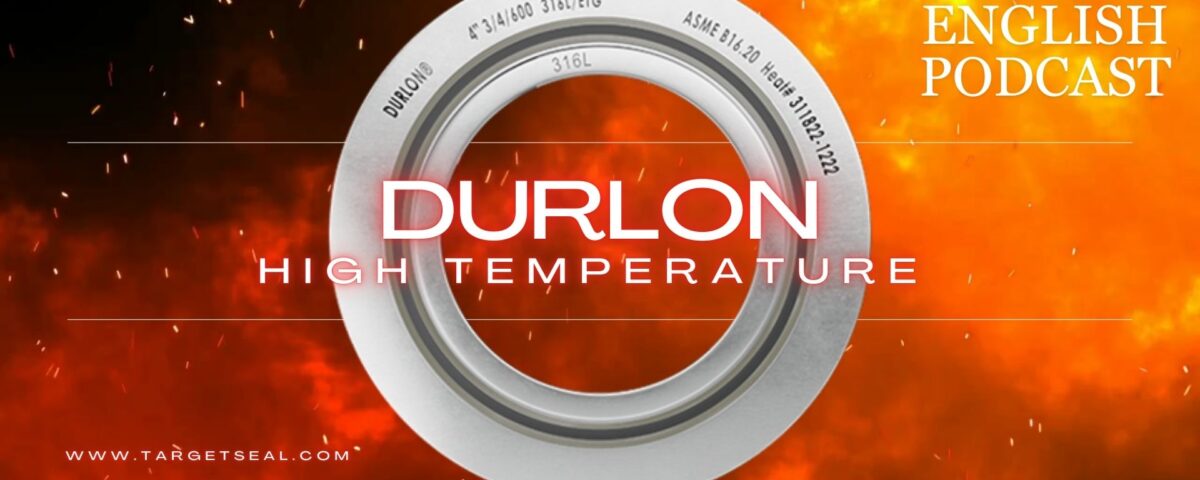
Durlon® Extreme Temperature Gaskets (ETG):
High-temperature sealing involves using the right gasket in industrial bolted joints exposed to extreme temperatures and pressure to provide effective sealing and last longer. Temperature limits for gaskets can be classified into various ranges, with examples including Phyllosilicate up to 1000ºC (1832ºF), Flexible Graphite up to 450ºC (850ºF), and Compressed Fibre up to 400ºC (750ºF).
High-temperature gaskets are needed in applications such as gas turbines, heat exchangers, and exhaust manifolds, commonly found in the refinery, power generation, and chemical industries.
Key materials mentioned for high-temperature applications include:
- Phyllosilicate: Specifically, phlogopite mica paper, which is a non-toxic naturally occurring hydrated silicate. It has high tensile strength, low weight loss at extreme conditions, is laboratory tested for fire safety, non-combustible, and a sustainable solution. Durlon® HT1000® is a material consisting of phlogopite mica paper impregnated with an inorganic binder, designed for ultimate extreme temperature sealing performance up to 1,000°C (1,832°F). It shows superior weight retention at 800°C compared to vermiculite-phyllosilicate filled products.
- Flexible Graphite: Standard industrial-grade flexible graphite typically begins to rapidly oxidize around 650°C (1,200°F). However, oxidation inhibitors can be added to significantly reduce the rate and amount of oxidation, extending seal life. SIGRAFLEX® APX2® is mentioned as a highly oxidation-resistant flexible graphite gasket material, free from adhesives and binders, developed for high-temperature applications.
Products designed for high-temperature sealing mentioned in the sources include:
- Durlon® HT1000®: Used as a sealing material on its own or combined with carriers. It can be found in Style S90 (phlogopite mica paper with inorganic binder, no carrier), Style L316 (with a 0.002” thick 316 stainless steel carrier), and Style T316 (with a 0.004” thick 316 stainless steel perforated carrier). There is also a Durlon® HT1000® Paste designed to be used with the sheet material for large dovetail gaskets, helping to eliminate possible leak paths.
- Durlon® Extreme Temperature Gaskets (ETG): Engineered for sealing gasketed joints exposed to high temperatures, typically greater than 650°C (1,200°F) and up to 1,000°C (1,832°F). ETG combines an oxidation boundary material (Durlon® HT1000®) with the stability and sealing characteristics of flexible graphite to preserve seal integrity and retain assembly torque. The ETG configuration adds inner and outer protection boundaries using Durlon® HT1000® to thermally shield the graphite.
- Durlon® SWG DRI-ETG: This is a specific type of ETG gasket. It includes a sealing element (D) combined with a centering ring (R) and an inner ring (I) which improves radial strength and protects the sealing element. This product uses HT1000® phlogopite mica and APX2® high temperature flexible graphite. It is highlighted for its performance in rigorous fire tests.
- Durlon® Kammprofile gaskets (e.g., K40-ETG): These have a solid metal core with serrated grooves, covered with soft sealing material like flexible graphite, expanded PTFE, HT1000®, or ETG's. They provide excellent sealing properties, fill minor flange imperfections, and protect flange surfaces.
- Durlon® Durtec® ETG: Made with a specially engineered machined metal core bonded on both sides with soft covering layers, typically flexible graphite. The core provides strong mechanical support and the gasket is designed to withstand high temperatures and pressures, be blowout resistant, and fire safe.
Performance of high-temperature gaskets can be assessed using tests like API 6FB fire tests. The API 6FB standard has Type 1 (Onshore) and Type 2 (Offshore) tests. The Type 2 (Offshore) test is recognized as more stringent, involving higher flame temperatures and a single, more intense burner compared to Type 1. The Durlon® SWG DRI-ETG gasket is noted for passing the API 6FB Type 2 test with zero leakage, an achievement described as unprecedented. Custom tests like the nitrogen sealability test are also used to evaluate performance at extremely high temperatures. In one such test, the ETG configuration improved leakage performance by 14 to 17 times compared to using only mica filler.
Visit our Youtube Channel and listen podcasts in English/ Arabic about this article.
